BMW Ur-Roadster - BMW Group press archive documentation
I love concept cars. They’re a playground for manufacturers to experiment with new technologies, materials, and designs. Many are impractical and simply act to showcase what could be accomplished without any financial burdens or safety constraints. Yet, seeing the visions of car designers and engineers truly pushing the limits of what is possible always makes me wonder; what if any of these vehicles did make it to market?
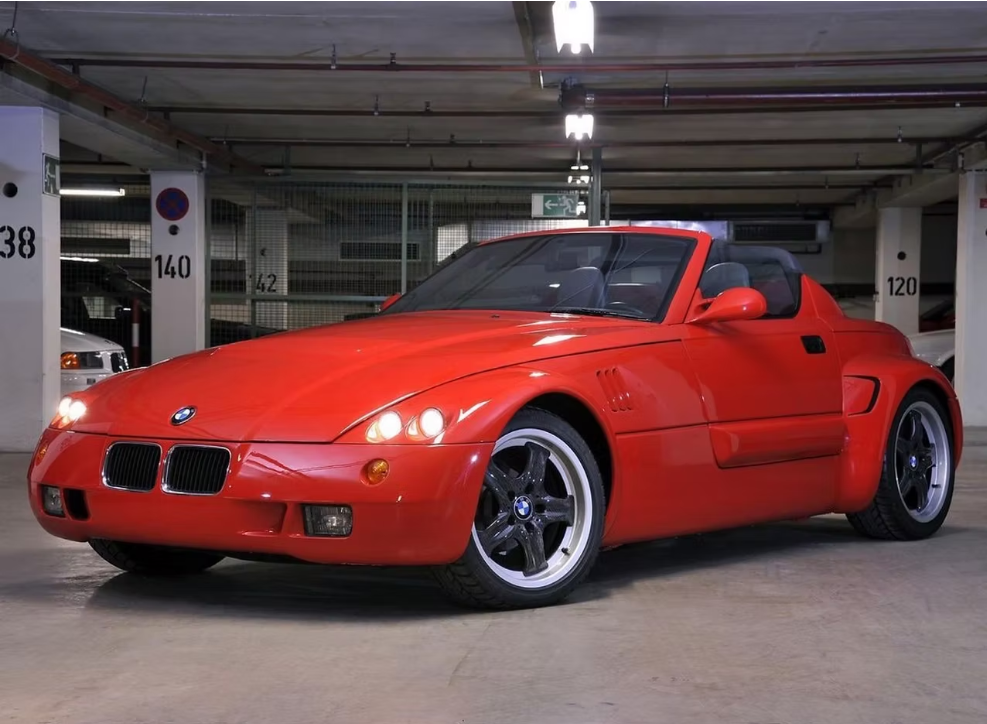
Now, BMW has many many concept cars. If you’ve read any of Steve Saxty’s books (I highly recommend, they are amazing), you’d get a small keyhole glimpse at the sheer magnitude of just how many there are. I want to talk about one that’s been forgotten; even now there still isn’t much information on it. Every picture of it seems like it was rushed, as if to avoid getting caught. I remember seeing a post on Instagram back in 2023 with this car in the background of many other concepts, only for it to be completely ignored in the comments. The car in question is the 1990 BMW Ur-Roadster.
BMW Ur-Roadster - BMW Group Technik GmbH original 1990 concept release documentation
To understand the Ur-Roadster, we first need to understand its sibling, the Z1. BMW created the Z1 as an image and technological exercise, showing off its retractable doors and removable body panels. Yes, BMW claimed that in 40 minutes you could take off the body panels and then swap them with different ones to change the color of your car. It was extremely forward thinking, so much so that it’s included in the name. The “Z” in “Z1” means Zunkunft in German, or future in English. The car was a hit and BMW wanted to capitalize off of its success while also pushing their own agenda. Further connect to their roots by creating sporty open-top two-seaters for the next generation. BMW landed on the name Ur-Roadster, with Ur- meaning original in German. Thus, the Ur-Roadster was born!
While the Z1 was a success, BMW wanted something a bit more conventional and accessible, something for the masses, especially in the United States. At this time, BMW was planning its South Carolina facility and believed this would be the perfect match. The M division would be able to create something other than coupes and sedans and could try its hand at an affordable broader appeal vehicle.
BMW Ur-Roadster - BMW Group press archive documentation
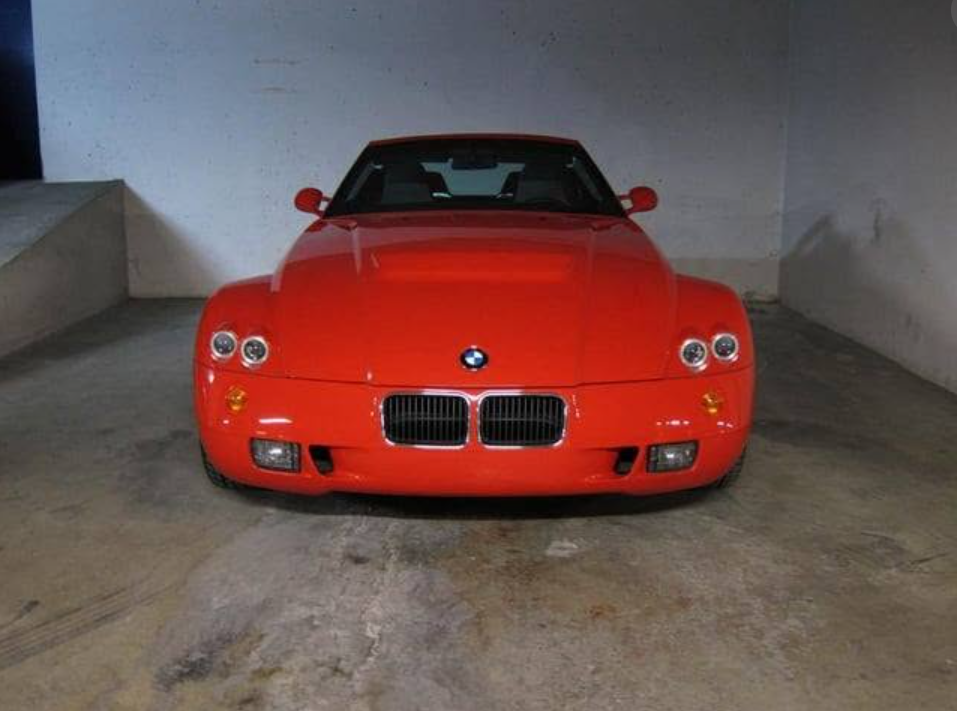
To start, they utilized the talent of designer, Ulf Weidhase, who was known for designing the famed E30 M3 as well as the range topping, E31 850CSi. Now, while those cars are gorgeous, the Ur-Roadster falls somewhat flat. That’s too generous, it is ugly! In the front we are greeted with four round headlights that seem too small for its face, low slung kidney grilles that feel out of place, and a long sloping hood that looks like it's slowly melting. The entire front fascia feels exaggerated and incredibly awkward.
BMW Ur-Roadster - BMW Group Technik GmbH original 1990 concept release documentation
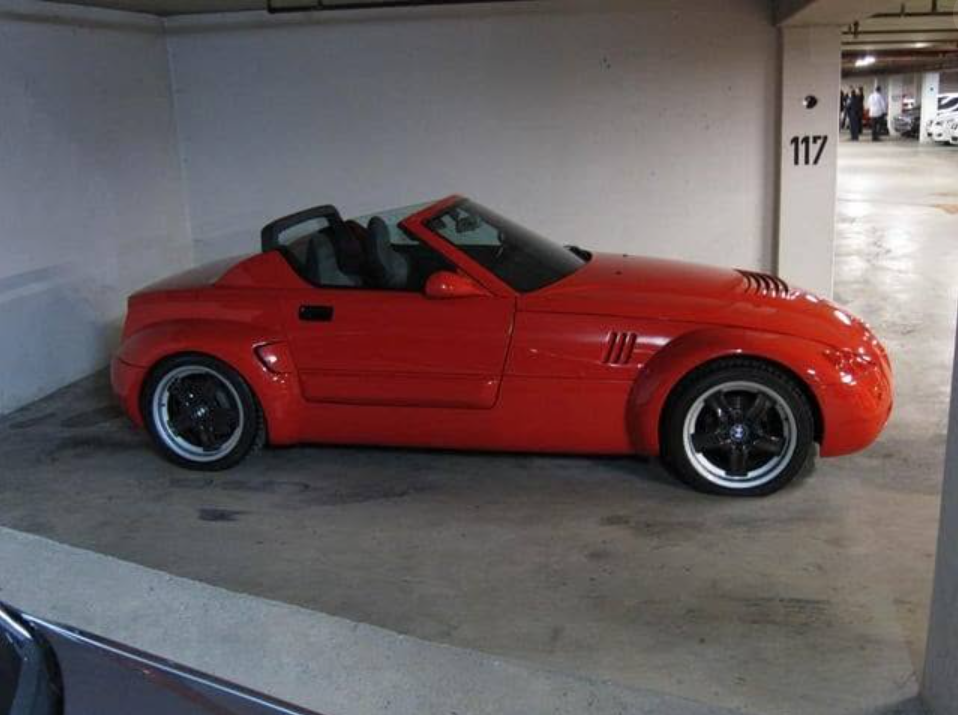
The side profile is equally as interesting. Here, we can see the extent of just how long the hood is, a familiar design trait of all “Z” vehicles. The passengers practically sit on the rear wheels, another staple. Extremely flared and boxy wheel arches protect the rear wheels, yet give the car a very muscular stance. Speaking of wheels, they appear to be made out of carbon fiber. This is a possibility as the E31 M8 concept had carbon fiber wheels as well as the E34 M5 20 Jahre.
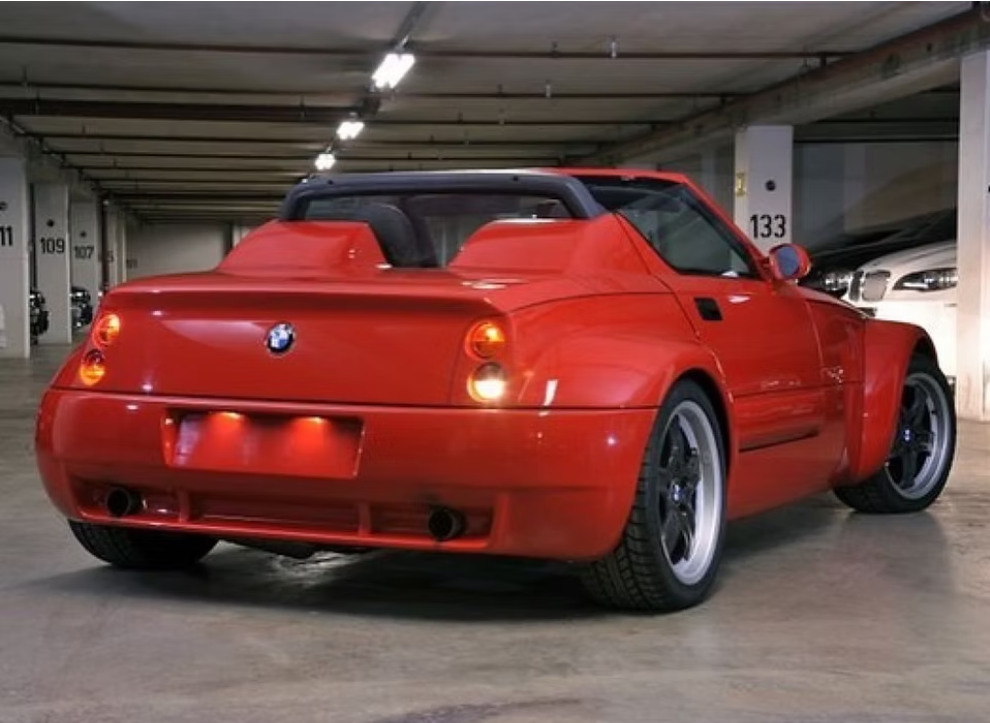
To no one’s surprise, the quirks continue on the back as well. The stubby trunk area and pronounced arches continue the theme of sport and muscularity. Two raised bits are present behind the passenger’s heads, which appear to be very speedster-esque. These help to integrate what I assume to be the roll over protection bar. To me, the rear is where the car shines. It looks the most put together and purposeful and arguably the best to look at.
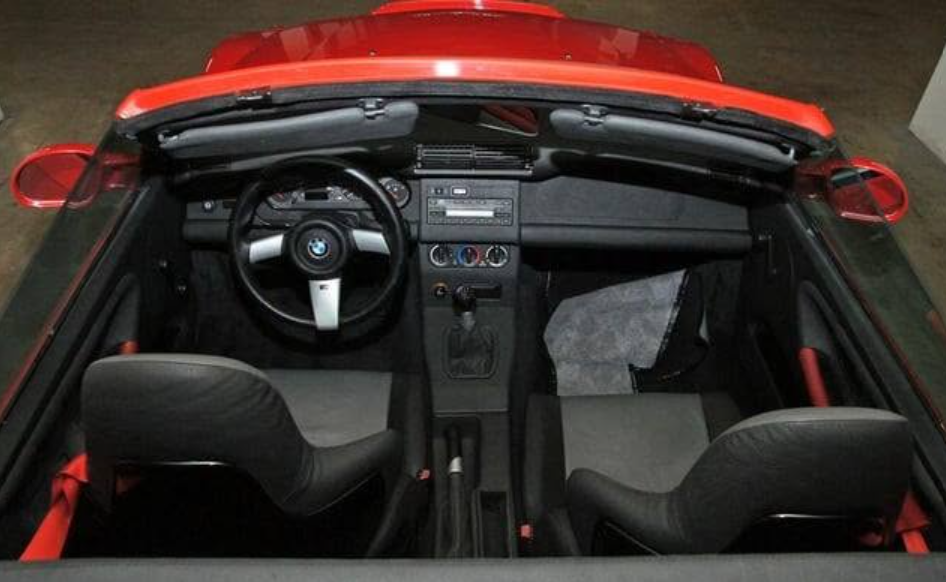
BMW Ur-Roadster - BMW Group Technik GmbH original 1990 concept release documentation
So, what powered Ur-Roadster? Surprisingly, it was the S14 from the E30 M3. Yes, the same legendary 2.3 liter from the M3 could be found at the front of this alien-like car. It was good for ~220 horsepower and sent power to the rear wheels. While this seems unexpected, it makes a little more sense the deeper we dive. This was a time when an “M vehicle” meant more than a big engine and compromised dynamics. Cars such as the E30 M3 and E34 M5 forewent the larger engines available and instead opted for smaller, lighter, more dialed options. This allowed for BMW to produce the lightest and most dynamic car available opposed to the most powerful. The Ur-Roadster is no different, and was sometimes referred to as the “Z1 M” (externally, not by BMW themself).
While the Ur-Roadster never made it to production, we can see its ethos live on in the Z3 M Roadster. The “M Roadster” as it’s more commonly known, was the mass market, high performance, two-seater that BMW wanted all along. It was nimble, had a straight-six opposed to a four-cylinder, seats were positioned on the rear wheels, and overlooked a long swooping hood. The M Roadster received more coherent styling and elements that made it distinctly BMW. So, thank you, Ur-Roadster, for your contribution to an icon and for truly standing out among the humdrum. We will not forget you!